
Australian Shepherd
The Australian Shepherd is athletic, smart, and eager to stay busy. It often suits motivated homes well, but it is still a working breed with a genuine need for structure.
Breed patterns are a starting point, not a promise. Health, breeding, age, social learning, training history, and the home all shape an individual dog.
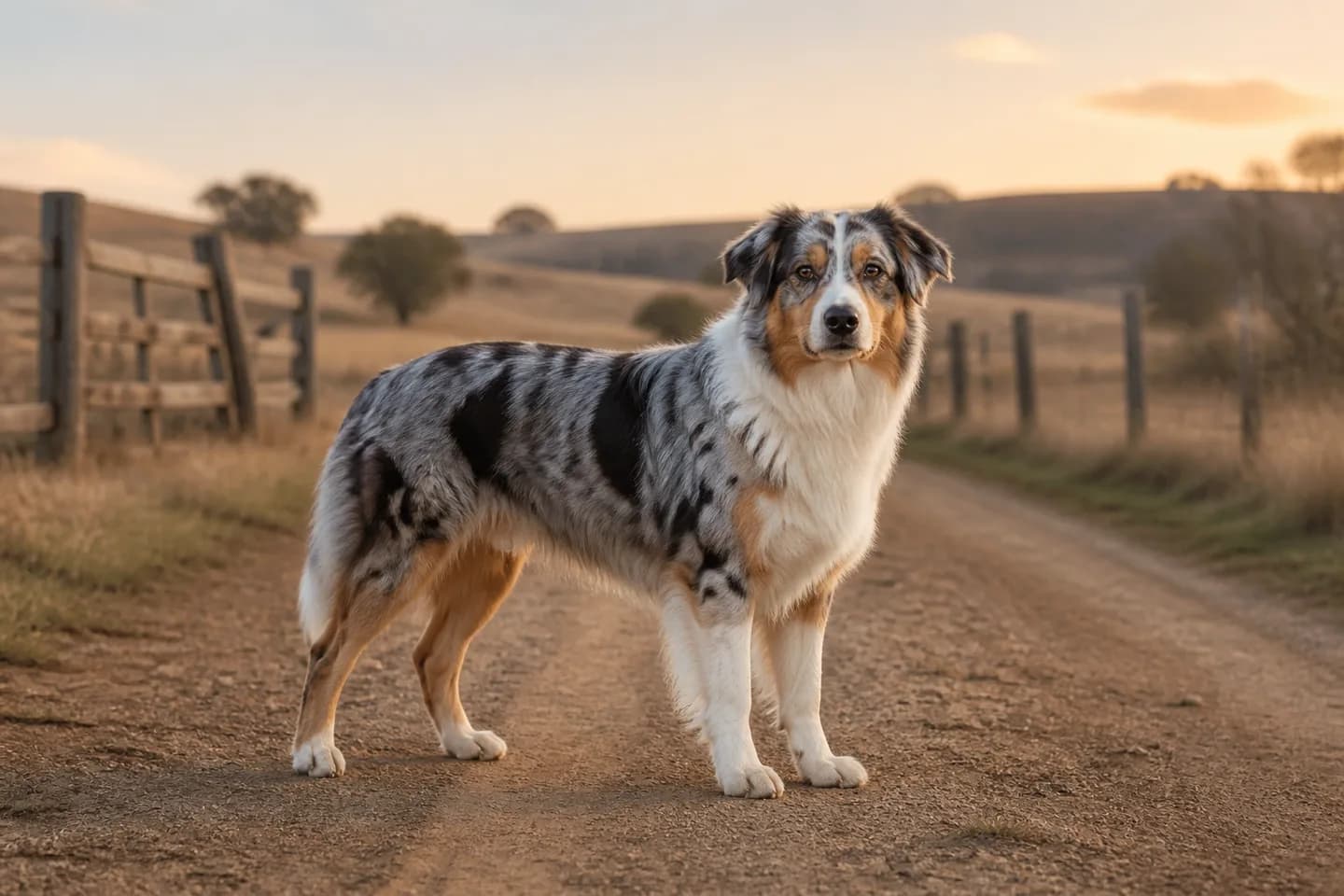
Quick reference
A compact view of the traits that most affect everyday ownership.
| Origin | Western United States |
|---|---|
| Original purpose | Ranch and livestock herding |
| Size | Medium |
| Typical lifespan | 12 to 15 years |
| Activity | Very high |
| Coat | Medium double coat |
| Shedding | Moderate to heavy seasonally |
| Voice | Moderate to high |
History and original purpose
Despite the name, the Australian Shepherd was developed as a working ranch dog in the American West. Its ancestry includes imported herding dogs, but the familiar modern type was shaped by American stock work and the practical demands of large ranches.
That background can show up as endurance, close handler awareness, watchfulness, motion sensitivity, and a desire to organize activity. A beautiful coat and clever expression can obscure how much structure, social neutrality, and daily mental work many Aussies need.
Temperament and daily feel
Very strong when the owner is clear and consistent
Exercise and mental work
This breed usually needs daily work, not just play. Training, outings, and mental tasks all matter if the dog is going to stay balanced.
Herding-style direction games, scent work, advanced obedience, agility foundations, purposeful retrieving, and body-awareness work can help. Include decompression and calm observation so the dog learns that not every movement requires action.
Grooming and coat care
Regular brushing helps manage seasonal shedding and keeps the coat comfortable during active outdoor living.
Shedding: Moderate to heavy seasonally
Home, children, and other pets
Can be wonderful in active homes, though the breed is rarely the simplest fit for casual family life.
Aussies can thrive with children and familiar animals, but chasing, heel nipping, guarding, and overexcitement need active prevention. The right match depends on the individual line and dog, not coat color or broad breed reputation.
Apartment fit: Usually difficult unless the owner is exceptional about exercise, structure, and quiet settling skills.
Time alone: Usually limited. Many Australian Shepherds want involvement and can become noisy or restless when under engaged.
Climate: Adaptable across much of the country, with common sense in summer heat and enough outlets during bad weather.
Health considerations
These are discussion points for a veterinarian, rescue, or responsible breeder, not a prediction or diagnosis for an individual dog.
- Breeding quality should include attention to eyes and joint soundness.
- Mental frustration can become a behavior issue quickly.
- Exercise needs should be met with structure, not chaos.
Ownership cost reality
Moderate for grooming, but enrichment, training, and activity logistics usually drive the true cost of ownership.
Best suited to
Owners who enjoy active training, Homes that can offer real daily jobs and outings, People wanting a highly engaged partner
Think twice if
Casual homes that only want a pretty active dog, Apartments with limited exercise options, Owners who dislike noise or intensity
Compare similar choices
These alternatives share part of the appeal, but their daily workload and home fit can differ.
| Breed | Size | Activity | Coat care | Home fit |
|---|---|---|---|---|
| Australian Shepherd | Medium | Very high | Regular brushing helps manage seasonal shedding and keeps the coat comfortable during active outdoor living. | Usually difficult unless the owner is exceptional about exercise, structure, and quiet settling skills. |
| Border Collie | Medium | Very high | Coat care is manageable for most owners, but seasonal shedding still shows up in a serious way. | Usually a difficult apartment fit because of intensity, sound level, and the need for sustained purposeful work. |
| German Shepherd | Large | High | Weekly brushing helps, though seasonal shedding can be substantial and household cleanup is part of life with the breed. | Usually not the easiest apartment breed because of size, guarding instincts, and exercise needs. |
| Pembroke Welsh Corgi | Small to medium | Moderate to high | Regular brushing helps with the substantial shedding that many first time buyers do not see coming. | Possible for engaged owners, though shedding, sound, and herding breed intensity make it less simple than the size suggests. |
Finding a responsible source
Ask about working intensity, sound sensitivity, recovery, eye screening, and orthopedic screening in the family. Avoid choosing primarily by merle pattern or eye color; stable temperament and functional health should lead the decision.
Ask what support is offered after placement, how health and behavior are assessed, and whether the dog can return if the match fails. Avoid pressure, vague records, and anyone unwilling to discuss the hard parts of living with the breed.
Decision notes before you commit
Compare these concerns with an ordinary weekday, your housing, support network, and the care you can sustain for the dog's full life.
- A mismatch between a sporty image and actual daily commitment
- Herding behavior around children or movement
- Sound level and frustration when underworked
Common questions
Continue your task
Related guides and next steps
Crate Training in the First Week
Use meals, rest, and short sessions to build comfort around the crate.
Summer Heat Safety for Dogs
Safer summer routines start with timing, hydration, and realistic expectations.
Questions to Ask a Breeder
A good breeder should welcome careful questions and clear expectations long before a deposit is discussed.
Australian Shepherd vs Border Collie
Two bright herding breeds that attract active people, though one often fits sporty family homes a little more easily while the other is closer to a true training specialist.
Best Dogs for Active Owners
A guide for people who want a dog that can match a full week of movement, outdoor time, and structured engagement.