
Boxer
The Boxer is joyful, physical, and often deeply devoted to its people. It suits homes that enjoy lively interaction and are prepared to guide exuberance rather than merely admire it.
Breed patterns are a starting point, not a promise. Health, breeding, age, social learning, training history, and the home all shape an individual dog.
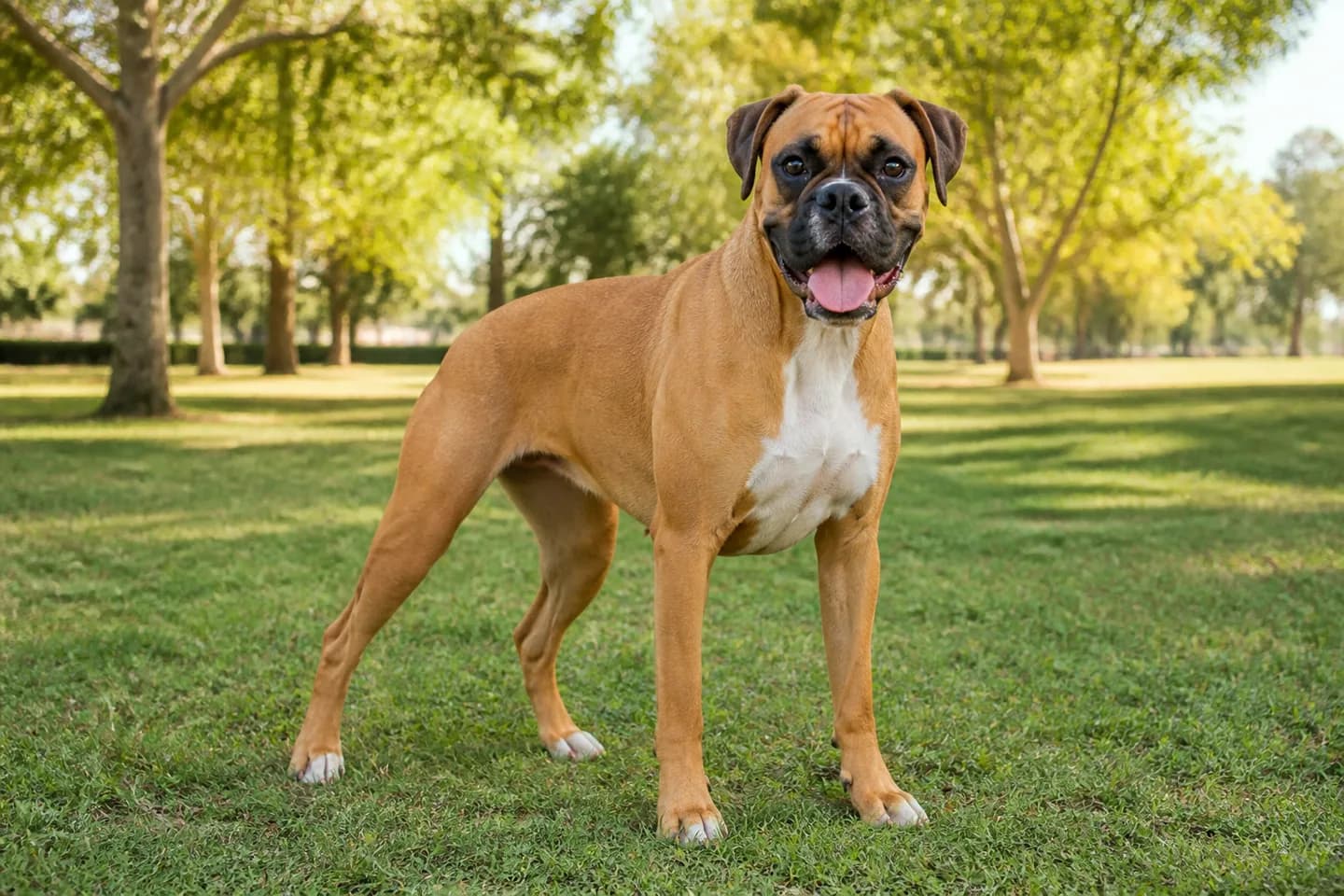
Quick reference
A compact view of the traits that most affect everyday ownership.
| Origin | Germany |
|---|---|
| Original purpose | Hunting assistance and later versatile guarding and utility work |
| Size | Large |
| Typical lifespan | 10 to 12 years |
| Activity | High |
| Coat | Short coat |
| Shedding | Low to moderate |
| Voice | Moderate |
History and original purpose
The Boxer developed in Germany from heavier hunting dogs, including Bullenbeisser-type ancestors, and was refined into a more athletic working breed. Its roles broadened from holding large quarry to guarding, service work, and family companionship.
Modern Boxers often combine physical confidence, close family attachment, playfulness, and watchfulness. They mature slowly in behavior, so adolescent jumping, pawing, mouthiness, and full-body play require consistent guidance rather than waiting for age to solve them.
Temperament and daily feel
Good when training is upbeat, clear, and consistent
Exercise and mental work
Boxers need daily movement and structured play, but they also need impulse control and settling practice so excitement does not run the household.
Short energetic training, scent games, controlled tug, carrying tasks, and varied walking routes can suit a Boxer. Heat-aware pacing and deliberate calm practice are important because excitement can outrun physical comfort.
Grooming and coat care
The short coat is simple to maintain, with occasional brushing and skin checks usually doing most of the work.
Shedding: Low to moderate
Home, children, and other pets
Often very strong for active families that can guide jumping, greeting behavior, and rough play.
Many Boxers are affectionate family dogs, but their strength and exuberance can overwhelm young children or fragile pets. Supervise active play and teach the dog to disengage, settle, and greet without using its whole body.
Apartment fit: Possible in some settings, though size, physical play style, and energy make a house or easier outdoor access more comfortable.
Time alone: Usually prefers regular company and routine, though mature adults can handle moderate alone time.
Climate: Warm weather needs caution because many Boxers do not handle heat as easily as owners expect.
Health considerations
These are discussion points for a veterinarian, rescue, or responsible breeder, not a prediction or diagnosis for an individual dog.
- Breeding quality matters for heart health and overall soundness.
- Heat tolerance deserves ongoing respect during warm months.
- Joint and muscle health benefit from sensible weight and controlled growth.
Ownership cost reality
Routine grooming costs stay low, but large breed food, training, and possible health expenses can push total cost well above a buyer's first estimate.
Best suited to
Active homes that enjoy a playful large dog, Families who can teach calm manners early, Owners who want affection and personality together
Think twice if
Quiet homes wanting a naturally settled dog, People unwilling to manage jumping and physical enthusiasm, Very hot outdoor lifestyles
Compare similar choices
These alternatives share part of the appeal, but their daily workload and home fit can differ.
| Breed | Size | Activity | Coat care | Home fit |
|---|---|---|---|---|
| Boxer | Large | High | The short coat is simple to maintain, with occasional brushing and skin checks usually doing most of the work. | Possible in some settings, though size, physical play style, and energy make a house or easier outdoor access more comfortable. |
| Labrador Retriever | Medium to large | High | Weekly brushing is usually enough, though shedding often rises during seasonal coat changes. | Possible in a larger apartment if exercise and mental work are handled well, though many Labradors are more comfortable with easier outdoor access. |
| Rottweiler | Large | Moderate to high | The coat is relatively straightforward, though the dog still sheds and needs routine brushing. | Usually not a simple fit because of size, strength, and the importance of good public handling. |
| German Shepherd | Large | High | Weekly brushing helps, though seasonal shedding can be substantial and household cleanup is part of life with the breed. | Usually not the easiest apartment breed because of size, guarding instincts, and exercise needs. |
Finding a responsible source
Ask for the heart and orthopedic screening recommended for the breed, discuss heat tolerance, and meet stable adults. Rescue groups should help assess dog-to-dog style, visitor behavior, and whether the household can manage adolescent energy.
Ask what support is offered after placement, how health and behavior are assessed, and whether the dog can return if the match fails. Avoid pressure, vague records, and anyone unwilling to discuss the hard parts of living with the breed.
Decision notes before you commit
Compare these concerns with an ordinary weekday, your housing, support network, and the care you can sustain for the dog's full life.
- Adolescent exuberance that can bowl people over
- Warm weather exercise that becomes unsafe too quickly
- A social dog turning unruly when structure is missing
Common questions
Continue your task
Related guides and next steps
Crate Training in the First Week
Use meals, rest, and short sessions to build comfort around the crate.
Summer Heat Safety for Dogs
Safer summer routines start with timing, hydration, and realistic expectations.
Questions to Ask a Breeder
A good breeder should welcome careful questions and clear expectations long before a deposit is discussed.
Boxer vs Labrador Retriever
Two outgoing family favorites that look similar on energy at a glance, yet feel quite different in impulse control, coat care, and everyday household style.
Best Family Dogs
A thoughtful starting point for households that want a dog with steady social skills, adaptable energy, and a strong record of living well with family routines.
Best Dogs for First Time Owners
A more careful look at breeds that often reward steady beginners, provided the household is honest about exercise, grooming, and training consistency.