
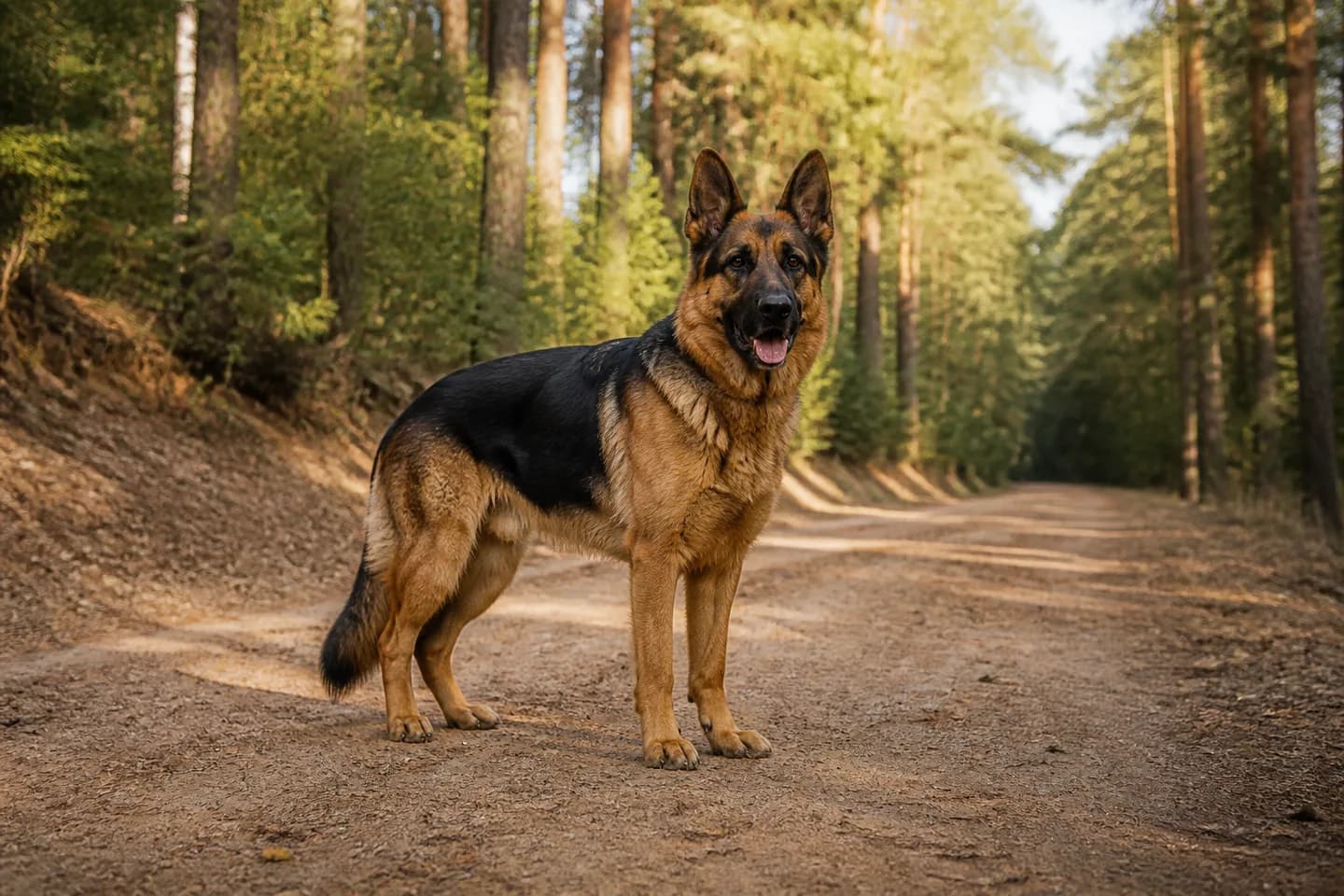
German Shepherd
The German Shepherd is intelligent, capable, and intensely loyal. It tends to do best with owners who can combine structure, training, confidence building, and real daily activity.
Breed patterns are a starting point, not a promise. Health, breeding, age, social learning, training history, and the home all shape an individual dog.
Quick reference
A compact view of the traits that most affect everyday ownership.
| Origin | Germany |
|---|---|
| Original purpose | Sheep herding and versatile utility work |
| Size | Large |
| Typical lifespan | 9 to 13 years |
| Activity | High |
| Coat | Dense double coat |
| Shedding | Moderate to heavy |
| Voice | Moderate to high |
History and original purpose
The modern German Shepherd Dog was standardized from regional German herding dogs selected for intelligence, responsiveness, stamina, and practical working ability. As traditional shepherding declined, the breed's versatility led to service, protection, detection, and assistance roles.
That history can appear today as vigilance, rapid learning, movement sensitivity, and a strong attachment to the person handling the dog. These qualities are valuable when guided well and difficult when socialization, recovery, and purposeful training are neglected.
Temperament and daily feel
High when leadership is steady and thoughtful
Exercise and mental work
A German Shepherd usually needs more than a long walk. It often does best with training tasks, controlled exercise, and clear goals.
Tracking, scent discrimination, precise obedience, controlled tug, environmental confidence work, and problem-solving tasks suit many German Shepherds. More arousal is not always better; the ability to disengage and settle is an essential part of the work.
Grooming and coat care
Weekly brushing helps, though seasonal shedding can be substantial and household cleanup is part of life with the breed.
Shedding: Moderate to heavy
Home, children, and other pets
Can be excellent in a committed home, but it asks more of the household than a typical easygoing family breed.
A stable German Shepherd can live well with children and familiar animals, but guarding tendencies, size, and motion sensitivity require adult management. Early neutral exposure and clear boundaries matter more than trying to make the dog greet everyone.
Apartment fit: Usually not the easiest apartment breed because of size, guarding instincts, and exercise needs.
Time alone: Many German Shepherds do poorly with long, empty days and can create their own job when understimulated.
Climate: Cold weather is often easier than humid heat. Warm climates require careful scheduling, cooling, and patience.
Health considerations
These are discussion points for a veterinarian, rescue, or responsible breeder, not a prediction or diagnosis for an individual dog.
- Good breeder screening for hips, elbows, and temperament is essential.
- Rapid growth and poor body condition can magnify orthopedic issues.
- Stress and over arousal often matter as much as raw exercise quantity.
Ownership cost reality
Training often costs more here than owners expect, and large breed food, veterinary care, and coat cleanup add up quickly.
Best suited to
Owners who enjoy training as part of daily life, Homes that want a focused working companion, People prepared for both mental and physical workload
Think twice if
Homes seeking an easy first dog, Very busy households with little structure, People who want low involvement
Compare similar choices
These alternatives share part of the appeal, but their daily workload and home fit can differ.
| Breed | Size | Activity | Coat care | Home fit |
|---|---|---|---|---|
| German Shepherd | Large | High | Weekly brushing helps, though seasonal shedding can be substantial and household cleanup is part of life with the breed. | Usually not the easiest apartment breed because of size, guarding instincts, and exercise needs. |
| Rottweiler | Large | Moderate to high | The coat is relatively straightforward, though the dog still sheds and needs routine brushing. | Usually not a simple fit because of size, strength, and the importance of good public handling. |
| Border Collie | Medium | Very high | Coat care is manageable for most owners, but seasonal shedding still shows up in a serious way. | Usually a difficult apartment fit because of intensity, sound level, and the need for sustained purposeful work. |
| Boxer | Large | High | The short coat is simple to maintain, with occasional brushing and skin checks usually doing most of the work. | Possible in some settings, though size, physical play style, and energy make a house or easier outdoor access more comfortable. |
Finding a responsible source
Prioritize documented hip and elbow screening, sound nerves, and adults that recover calmly from novelty. Ask how breeders evaluate working intensity and household suitability; rescues should be candid about handling, visitor, and animal history.
Ask what support is offered after placement, how health and behavior are assessed, and whether the dog can return if the match fails. Avoid pressure, vague records, and anyone unwilling to discuss the hard parts of living with the breed.
Decision notes before you commit
Compare these concerns with an ordinary weekday, your housing, support network, and the care you can sustain for the dog's full life.
- Sensitivity to poor breeding and weak early socialization
- Guarding behavior that needs thoughtful handling
- A need for purposeful activity beyond casual exercise
Common questions
Continue your task
Related guides and next steps
Crate Training in the First Week
Use meals, rest, and short sessions to build comfort around the crate.
Summer Heat Safety for Dogs
Safer summer routines start with timing, hydration, and realistic expectations.
Questions to Ask a Breeder
A good breeder should welcome careful questions and clear expectations long before a deposit is discussed.
German Shepherd vs Border Collie
Two intelligent working breeds that attract active owners, yet they ask for different kinds of structure, social handling, and mental work.
Rottweiler vs German Shepherd
Two serious guardian type breeds that demand responsible ownership, though one often feels calmer and heavier while the other often feels more agile and more sensitive to social handling.
Best Dogs for Active Owners
A guide for people who want a dog that can match a full week of movement, outdoor time, and structured engagement.