
Labrador Retriever
The Labrador Retriever is social, steady, and deeply people focused. It tends to thrive in homes that can offer daily movement, clear routines, and regular involvement in family life.
Breed patterns are a starting point, not a promise. Health, breeding, age, social learning, training history, and the home all shape an individual dog.
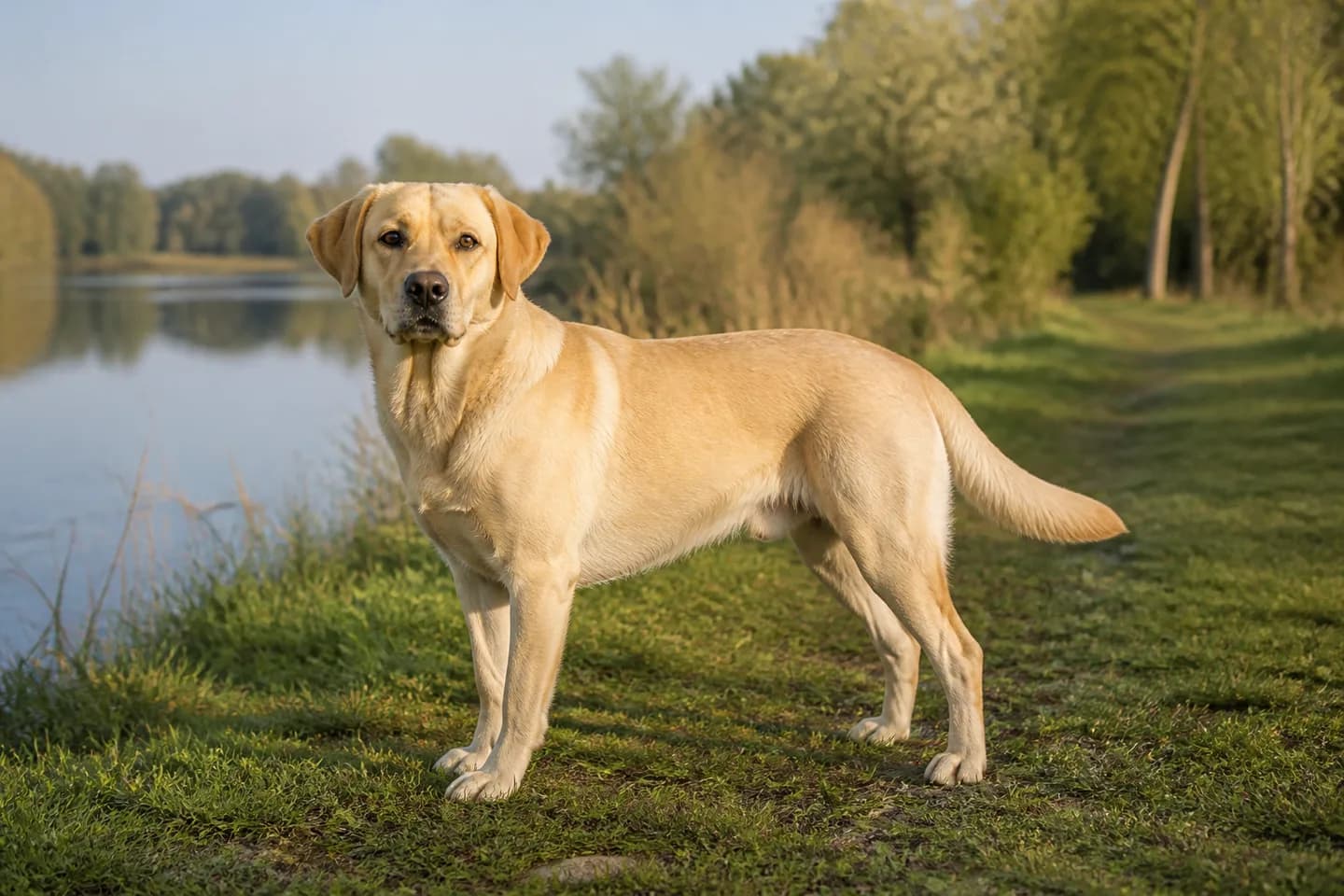
Quick reference
A compact view of the traits that most affect everyday ownership.
| Origin | Newfoundland, Canada, with later development in Britain |
|---|---|
| Original purpose | Water work and retrieving for fishermen and shooting estates |
| Size | Medium to large |
| Typical lifespan | 10 to 12 years |
| Activity | High |
| Coat | Short double coat |
| Shedding | Moderate to heavy through the year |
| Voice | Usually moderate |
History and original purpose
The Labrador descends from the smaller St. John's water dogs used around Newfoundland. British visitors valued their willingness to swim, retrieve, and work closely with people, then developed those dogs into the modern sporting retriever.
That working past still helps explain the Labrador's water interest, carrying instinct, food motivation, social confidence, and desire to participate. A modern family does not need to hunt, but most Labradors still benefit from retrieving games, swimming where safe, and training that turns enthusiasm into useful habits.
Temperament and daily feel
Usually very responsive to clear routines and reward based training
Exercise and mental work
Most healthy adults need a full daily mix of walks, retrieving games, sniffing time, and short training sessions.
Retrieving with rules, scent searches, food puzzles, body-awareness exercises, and short skill sessions usually work better than relying on distance alone. Young Labradors especially need practice settling after activity, not an endlessly expanding exercise schedule.
Grooming and coat care
Weekly brushing is usually enough, though shedding often rises during seasonal coat changes.
Shedding: Moderate to heavy through the year
Home, children, and other pets
Often excellent for family life when adults guide excitement, jumping, and food manners early.
Many Labradors are sociable with children and other dogs, but adolescent size, jumping, tail strength, and food interest require supervision. Calm greetings, protected rest, and separate feeding help the household enjoy the breed's friendliness without letting excitement run the day.
Apartment fit: Possible in a larger apartment if exercise and mental work are handled well, though many Labradors are more comfortable with easier outdoor access.
Time alone: Most Labradors do best with moderate alone time and can become restless if left under exercised and under engaged.
Climate: Usually adapts well in many parts of the United States, but hot and humid conditions still call for careful pacing and hydration.
Health considerations
These are discussion points for a veterinarian, rescue, or responsible breeder, not a prediction or diagnosis for an individual dog.
- Reputable breeders should screen hips, elbows, and eyes.
- Weight control matters because extra pounds can magnify orthopedic strain.
- Food motivation is useful for training, but it can also hide overfeeding.
Ownership cost reality
Usually moderate for grooming, but food, training, and joint related care can make total ownership more expensive than many families expect.
Best suited to
Families that want an outgoing companion, Owners who enjoy training through everyday life, Homes that can support activity in all seasons
Think twice if
Households that want a very quiet dog, Homes with long isolated workdays and little exercise time, People who dislike shedding
Compare similar choices
These alternatives share part of the appeal, but their daily workload and home fit can differ.
| Breed | Size | Activity | Coat care | Home fit |
|---|---|---|---|---|
| Labrador Retriever | Medium to large | High | Weekly brushing is usually enough, though shedding often rises during seasonal coat changes. | Possible in a larger apartment if exercise and mental work are handled well, though many Labradors are more comfortable with easier outdoor access. |
| Golden Retriever | Medium to large | High | Frequent brushing helps limit mats, keeps feathering tidy, and makes heavy shedding easier to manage. | Possible only for households that are realistic about exercise and grooming. The breed generally feels easier in homes with more room. |
| Poodle | Medium to large | Moderate to high | Professional grooming or confident home maintenance becomes part of the routine for most Poodles. | Often workable in apartments for owners who commit to exercise, enrichment, and grooming schedules. |
| Boxer | Large | High | The short coat is simple to maintain, with occasional brushing and skin checks usually doing most of the work. | Possible in some settings, though size, physical play style, and energy make a house or easier outdoor access more comfortable. |
Finding a responsible source
Ask for documented hip, elbow, and eye screening, discuss the temperament and working level of both parents, and meet adult relatives when possible. Breed rescue and shelters can also be valuable when an adult dog's energy and home behavior are already known.
Ask what support is offered after placement, how health and behavior are assessed, and whether the dog can return if the match fails. Avoid pressure, vague records, and anyone unwilling to discuss the hard parts of living with the breed.
Decision notes before you commit
Compare these concerns with an ordinary weekday, your housing, support network, and the care you can sustain for the dog's full life.
- Fast weight gain when food management is loose
- High enthusiasm that can overwhelm small children if training is delayed
- Heavy shedding and a strong need for daily engagement
Common questions
Continue your task
Related guides and next steps
Crate Training in the First Week
Use meals, rest, and short sessions to build comfort around the crate.
Summer Heat Safety for Dogs
Safer summer routines start with timing, hydration, and realistic expectations.
How to Read Dog Food Labels
Focus on the full label, not only the front of the bag.
Labrador Retriever vs Golden Retriever
Two beloved family breeds with strong trainability, social temperaments, and very different coat care demands.
Boxer vs Labrador Retriever
Two outgoing family favorites that look similar on energy at a glance, yet feel quite different in impulse control, coat care, and everyday household style.
Best Family Dogs
A thoughtful starting point for households that want a dog with steady social skills, adaptable energy, and a strong record of living well with family routines.