
Miniature Schnauzer
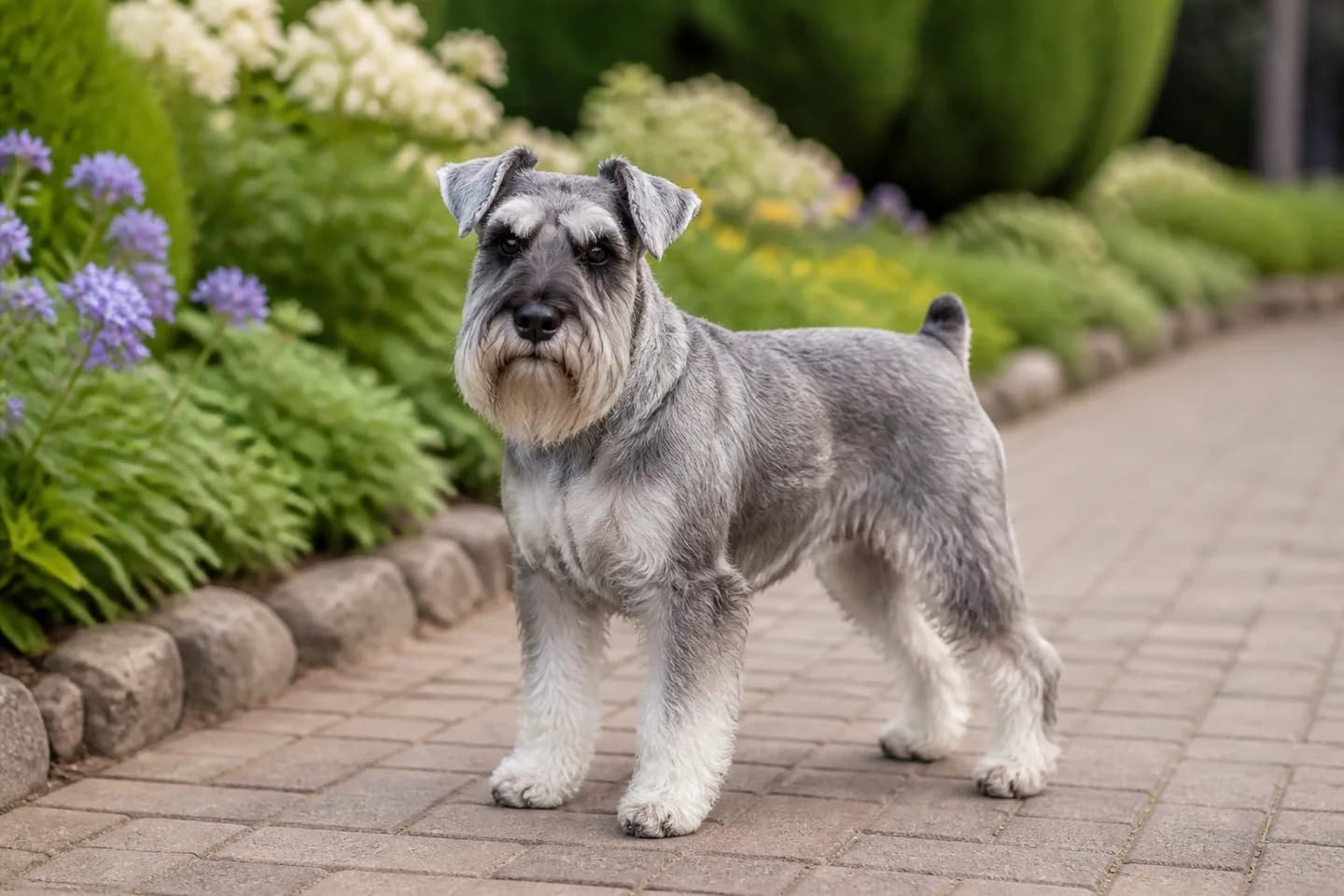
The Miniature Schnauzer combines confidence, trainability, and a practical small size. It often suits city life well, though the alert temperament means sound management still matters.
Breed patterns are a starting point, not a promise. Health, breeding, age, social learning, training history, and the home all shape an individual dog.
Quick reference
A compact view of the traits that most affect everyday ownership.
| Origin | Germany |
|---|---|
| Original purpose | Farm and household vermin control |
| Size | Small |
| Typical lifespan | 12 to 15 years |
| Activity | Moderate |
| Coat | Wiry coat |
| Shedding | Low |
| Voice | Moderate to high |
History and original purpose
German farmers developed the Miniature Schnauzer by reducing the size of versatile farm Schnauzers and using other small dogs to create an agile ratter. It became a distinct small working companion while keeping the characteristic wiry coat, beard, and alert outlook.
Ratting ancestry can show up as quick reactions, interest in small moving animals, digging, and a confident voice. The breed's portable size and low shedding are appealing, but grooming, barking, and daily engagement remain real parts of the workload.
Temperament and daily feel
Good when the owner channels the terrier brain well
Exercise and mental work
Most Miniature Schnauzers do well with daily walks, short training sessions, and active play without needing extreme exercise volume.
Scent games, barn-hunt-style searches, trick training, food puzzles, and brisk varied walks can fit well. Reward quiet observation and settling so alertness does not become a running commentary on every sound.
Grooming and coat care
Regular clipping or hand stripping keeps the coat manageable and comfortable. Beard cleanup also becomes part of everyday life.
Shedding: Low
Home, children, and other pets
Often very good for families that want a sturdy smaller dog with real personality.
Miniature Schnauzers can be lively family dogs and may live well with familiar pets. Introductions to rodents or other small animals require caution, while children should respect the beard, food, and protected rest.
Apartment fit: Usually strong for apartment living if the owner manages alert barking and still provides mental work.
Time alone: Moderate alone time is often fine once routine and house manners are established.
Climate: Adaptable in many climates with ordinary seasonal gear and coat care.
Health considerations
These are discussion points for a veterinarian, rescue, or responsible breeder, not a prediction or diagnosis for an individual dog.
- Weight management matters because small sturdy dogs still lose mobility when they get heavy.
- Routine grooming helps skin and coat comfort.
- Dental care should stay on the radar like it does for many smaller breeds.
Ownership cost reality
Grooming is the main recurring cost difference compared with a short coated small breed.
Best suited to
City owners wanting a sturdy smaller dog, Homes that enjoy training and interaction, People who prefer lower shedding
Think twice if
Households that need a naturally quiet dog, Owners unwilling to maintain the coat, People expecting a passive lap dog
Compare similar choices
These alternatives share part of the appeal, but their daily workload and home fit can differ.
| Breed | Size | Activity | Coat care | Home fit |
|---|---|---|---|---|
| Miniature Schnauzer | Small | Moderate | Regular clipping or hand stripping keeps the coat manageable and comfortable. Beard cleanup also becomes part of everyday life. | Usually strong for apartment living if the owner manages alert barking and still provides mental work. |
| Poodle | Medium to large | Moderate to high | Professional grooming or confident home maintenance becomes part of the routine for most Poodles. | Often workable in apartments for owners who commit to exercise, enrichment, and grooming schedules. |
| Shih Tzu | Small | Low to moderate | A long coat demands regular brushing or a practical trim schedule. Eye and face care also become part of routine maintenance. | Often excellent for apartment living because of size and moderate exercise needs. |
| Chihuahua | Very small | Low to moderate | Smooth coats are easy to keep clean. Long coats need more brushing but still stay manageable for most homes. | Usually excellent for small homes because of size, though sound and reactivity still need thoughtful training. |
Finding a responsible source
Ask for the health testing recommended by the parent club and discuss eye, urinary, metabolic, and temperament history without assuming every dog will share the same risks. Confirm how puppies are introduced to grooming and ordinary household noise.
Ask what support is offered after placement, how health and behavior are assessed, and whether the dog can return if the match fails. Avoid pressure, vague records, and anyone unwilling to discuss the hard parts of living with the breed.
Decision notes before you commit
Compare these concerns with an ordinary weekday, your housing, support network, and the care you can sustain for the dog's full life.
- Alert barking becoming a household habit
- Owners picking low shedding without planning for coat care
- Terrier confidence being mistaken for automatic obedience
Common questions
Continue your task
Related guides and next steps
Crate Training in the First Week
Use meals, rest, and short sessions to build comfort around the crate.
How to Read Dog Food Labels
Focus on the full label, not only the front of the bag.
Questions to Ask a Breeder
A good breeder should welcome careful questions and clear expectations long before a deposit is discussed.
Pembroke Welsh Corgi vs Miniature Schnauzer
Two bright smaller breeds that fit many active households, though one sheds more and carries herding breed push while the other brings more bark and grooming upkeep.
Best Dogs for Apartment Living
A guide for households that need a dog whose size, sound level, and indoor rhythm fit urban or compact spaces.
Best Dogs for First Time Owners
A more careful look at breeds that often reward steady beginners, provided the household is honest about exercise, grooming, and training consistency.