
Rottweiler
The Rottweiler is powerful, steady, and deeply affected by breeding quality and handling. In the right home it can be exceptional. In the wrong one it is a serious mistake.
Breed patterns are a starting point, not a promise. Health, breeding, age, social learning, training history, and the home all shape an individual dog.
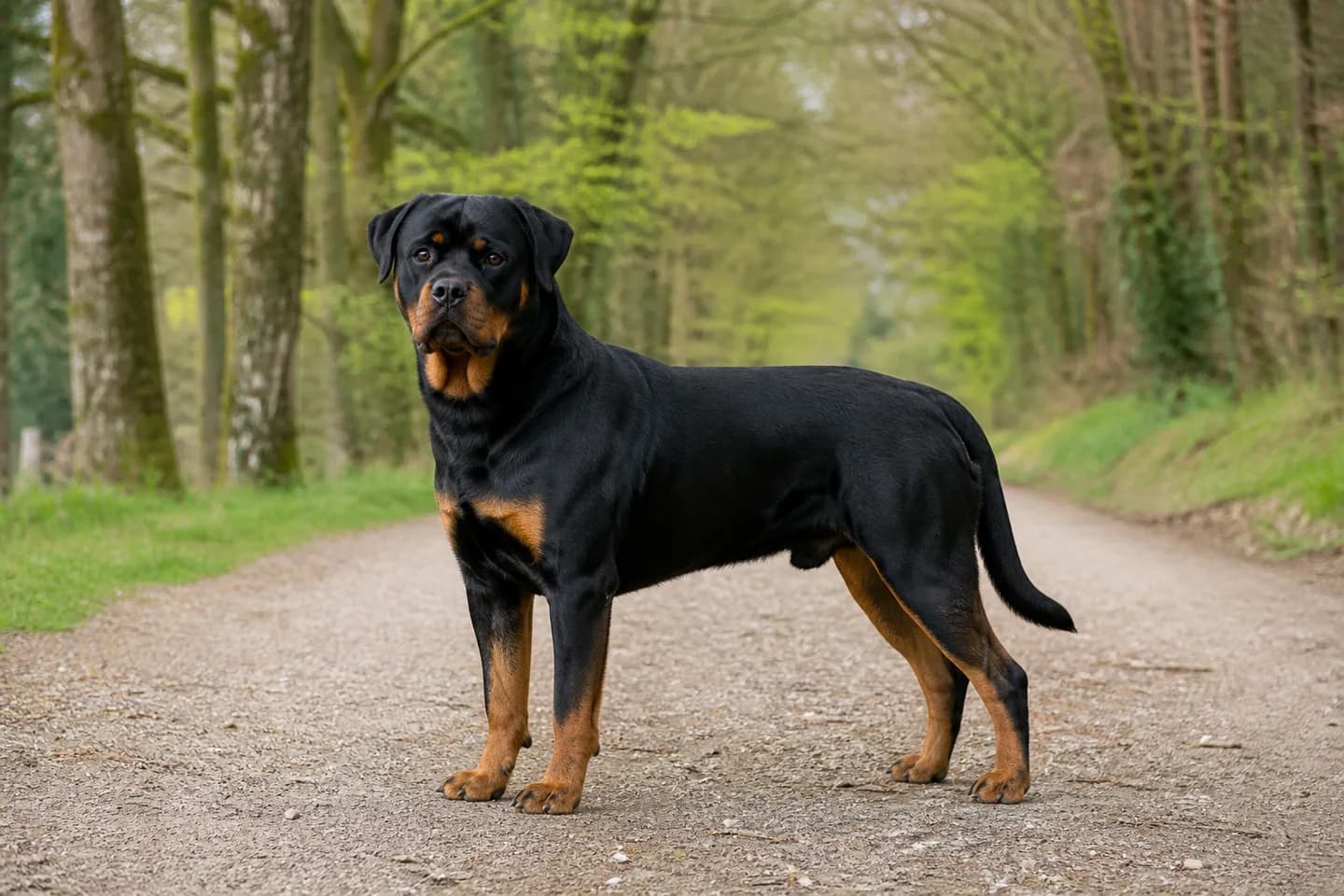
Quick reference
A compact view of the traits that most affect everyday ownership.
| Origin | Germany |
|---|---|
| Original purpose | Cattle driving, cart pulling, and guarding |
| Size | Large |
| Typical lifespan | 9 to 10 years |
| Activity | Moderate to high |
| Coat | Short double coat |
| Shedding | Moderate |
| Voice | Low to moderate |
History and original purpose
Rottweilers developed around the cattle-trading town of Rottweil from robust drover dogs used to move livestock, protect property, and pull carts. When those jobs declined, their strength, trainability, and confidence supported new utility and service roles.
That working inheritance can appear as physical power, close loyalty, confidence, and a serious response to the environment. A good family Rottweiler needs stable genetics, broad social learning, precise manners, and owners who can guide strength without intimidation.
Temperament and daily feel
High when the owner is calm, fair, and consistent
Exercise and mental work
Rottweilers need daily exercise and training, but they usually do not require frantic activity. What matters more is structure, control, and purposeful guidance.
Tracking, scent work, structured obedience, controlled tug, carting foundations, and cooperative handling can all suit the breed. Practice neutrality and recovery as deliberately as active skills; constant guarding rehearsal is neither necessary nor healthy.
Grooming and coat care
The coat is relatively straightforward, though the dog still sheds and needs routine brushing.
Shedding: Moderate
Home, children, and other pets
Can be excellent in a very responsible home, but this is not a breed to choose casually for a family image.
Well-matched Rottweilers can live with children and familiar animals, but supervision is non-negotiable because of strength and guarding potential. Adults should manage visitors, food, active play, and dog-to-dog interactions rather than relying on affection alone.
Apartment fit: Usually not a simple fit because of size, strength, and the importance of good public handling.
Time alone: Moderate alone time is possible for well trained adults, though the breed does best in stable well managed routines.
Climate: Adaptable with normal caution in heat and enough movement in cold weather.
Health considerations
These are discussion points for a veterinarian, rescue, or responsible breeder, not a prediction or diagnosis for an individual dog.
- Joint health and body condition matter greatly in a powerful large breed.
- Temperament screening should be a central part of breeder selection.
- Training quality has safety implications because of the dog's strength.
Ownership cost reality
Training and large breed veterinary care often drive the cost more than grooming or daily maintenance.
Best suited to
Experienced owners who want a serious working companion, Homes that can prioritize training and stability, People comfortable managing a strong large dog
Think twice if
Homes seeking an easy first dog, Owners attracted mainly to image or protection fantasies, Busy chaotic households with little structure
Compare similar choices
These alternatives share part of the appeal, but their daily workload and home fit can differ.
| Breed | Size | Activity | Coat care | Home fit |
|---|---|---|---|---|
| Rottweiler | Large | Moderate to high | The coat is relatively straightforward, though the dog still sheds and needs routine brushing. | Usually not a simple fit because of size, strength, and the importance of good public handling. |
| German Shepherd | Large | High | Weekly brushing helps, though seasonal shedding can be substantial and household cleanup is part of life with the breed. | Usually not the easiest apartment breed because of size, guarding instincts, and exercise needs. |
| Boxer | Large | High | The short coat is simple to maintain, with occasional brushing and skin checks usually doing most of the work. | Possible in some settings, though size, physical play style, and energy make a house or easier outdoor access more comfortable. |
| Great Dane | Giant | Moderate | The coat is easy, though giant dog cleanup, drool for some lines, and nail care still matter in a big way. | Possible only for unusual households with enough indoor space and excellent daily logistics. Size matters more than energy label here. |
Finding a responsible source
Request documented hip, elbow, heart, and eye screening and meet adults with calm, recoverable temperaments. Breeders and rescues should ask detailed questions about experience, housing, visitors, other animals, and the household's ability to continue training.
Ask what support is offered after placement, how health and behavior are assessed, and whether the dog can return if the match fails. Avoid pressure, vague records, and anyone unwilling to discuss the hard parts of living with the breed.
Decision notes before you commit
Compare these concerns with an ordinary weekday, your housing, support network, and the care you can sustain for the dog's full life.
- Poor breeding and unstable temperament
- Owners using force instead of patient structure
- Choosing the breed for status rather than suitability
Common questions
Continue your task
Related guides and next steps
Crate Training in the First Week
Use meals, rest, and short sessions to build comfort around the crate.
Questions to Ask a Breeder
A good breeder should welcome careful questions and clear expectations long before a deposit is discussed.
Summer Heat Safety for Dogs
Safer summer routines start with timing, hydration, and realistic expectations.
Rottweiler vs German Shepherd
Two serious guardian type breeds that demand responsible ownership, though one often feels calmer and heavier while the other often feels more agile and more sensitive to social handling.