
Bernese Mountain Dog
The Bernese Mountain Dog wins hearts with a soft temperament and striking appearance. It also brings heavy coat, large body care, and warm weather limitations that need honest planning.
Breed patterns are a starting point, not a promise. Health, breeding, age, social learning, training history, and the home all shape an individual dog.
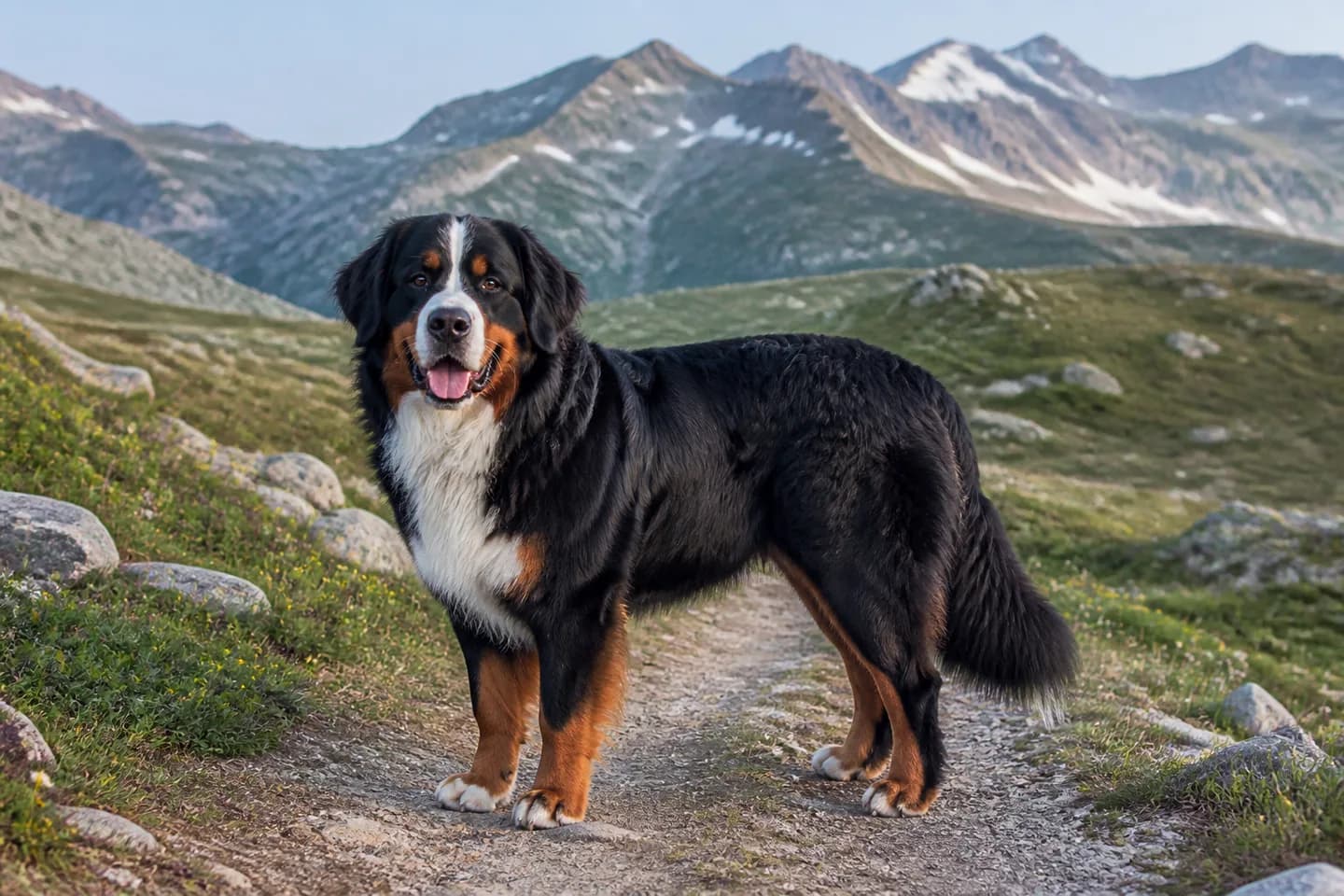
Quick reference
A compact view of the traits that most affect everyday ownership.
| Origin | The Bern region of Switzerland |
|---|---|
| Original purpose | Farm work including cart pulling, cattle movement, and guarding |
| Size | Large |
| Typical lifespan | 7 to 10 years |
| Activity | Moderate |
| Coat | Thick long coat |
| Shedding | Heavy |
| Voice | Usually low to moderate |
History and original purpose
Bernese Mountain Dogs were all-purpose farm dogs in the Swiss countryside. Their strength supported draft work and cattle movement, while their presence and close partnership with farming families made them useful watchdogs and companions.
The breed's farm background helps explain its sturdy body, willingness to work with people, and comfort in cool conditions. Modern homes still need to plan for a very large dog, substantial coat, heat sensitivity, slow physical maturation, and a lifespan that can feel painfully short.
Temperament and daily feel
Good when training is patient and consistent
Exercise and mental work
Moderate daily exercise is often enough, though the dog still benefits from structure, outings, and sensible conditioning.
Draft foundations, controlled carrying, scent games, gentle obedience, and steady hikes in suitable weather can fit well. Protect growing joints and avoid using repetitive high-impact exercise to manage youthful energy.
Grooming and coat care
Brushing several times each week is normal, and seasonal shedding creates real cleanup work in the house and car.
Shedding: Heavy
Home, children, and other pets
Often wonderful for families that want a calm large presence and can handle the size responsibly.
Many Bernese are gentle with family members and compatible animals, but size alone requires supervision around small children. Teach calm movement in tight spaces and provide a cool, undisturbed place to rest.
Apartment fit: Usually poor because of size, coat, and the practical burden of managing a very large dog in tight space.
Time alone: Moderate alone time is possible, though many prefer close family life and predictable rhythm.
Climate: Cool climates are easier. Heat and humidity often limit comfort much sooner than owners expect.
Health considerations
These are discussion points for a veterinarian, rescue, or responsible breeder, not a prediction or diagnosis for an individual dog.
- Large breed orthopedic and cancer related concerns deserve careful breeder research.
- Body condition and growth management are important during development.
- Warm weather risk is a daily planning factor in many regions.
Ownership cost reality
Large breed food, grooming, bedding, travel logistics, and veterinary care make this an expensive breed over time.
Best suited to
Families wanting a gentle large companion, Homes in cooler climates, People with enough space and budget for a giant dog
Think twice if
Hot climate households with long outdoor routines, Small apartments, Owners hoping for low cost large breed ownership
Compare similar choices
These alternatives share part of the appeal, but their daily workload and home fit can differ.
| Breed | Size | Activity | Coat care | Home fit |
|---|---|---|---|---|
| Bernese Mountain Dog | Large | Moderate | Brushing several times each week is normal, and seasonal shedding creates real cleanup work in the house and car. | Usually poor because of size, coat, and the practical burden of managing a very large dog in tight space. |
| Great Dane | Giant | Moderate | The coat is easy, though giant dog cleanup, drool for some lines, and nail care still matter in a big way. | Possible only for unusual households with enough indoor space and excellent daily logistics. Size matters more than energy label here. |
| Golden Retriever | Medium to large | High | Frequent brushing helps limit mats, keeps feathering tidy, and makes heavy shedding easier to manage. | Possible only for households that are realistic about exercise and grooming. The breed generally feels easier in homes with more room. |
| Rottweiler | Large | Moderate to high | The coat is relatively straightforward, though the dog still sheds and needs routine brushing. | Usually not a simple fit because of size, strength, and the importance of good public handling. |
Finding a responsible source
Longevity and broad family health history should be central questions alongside documented orthopedic and other breed-recommended screening. Rescue matching should consider mobility, heat management, stairs, transport, and the practical costs of giant-dog care.
Ask what support is offered after placement, how health and behavior are assessed, and whether the dog can return if the match fails. Avoid pressure, vague records, and anyone unwilling to discuss the hard parts of living with the breed.
Decision notes before you commit
Compare these concerns with an ordinary weekday, your housing, support network, and the care you can sustain for the dog's full life.
- Warm weather discomfort
- Very short average lifespan compared with many breeds
- The expense of keeping a giant coated dog healthy
Common questions
Continue your task
Related guides and next steps
Summer Heat Safety for Dogs
Safer summer routines start with timing, hydration, and realistic expectations.
How to Read Dog Food Labels
Focus on the full label, not only the front of the bag.
Questions to Ask a Breeder
A good breeder should welcome careful questions and clear expectations long before a deposit is discussed.
Great Dane vs Bernese Mountain Dog
Two giant breeds that attract owners with gentle temperaments, though one is easier on grooming and the other is usually more comfortable in cool outdoor life.