
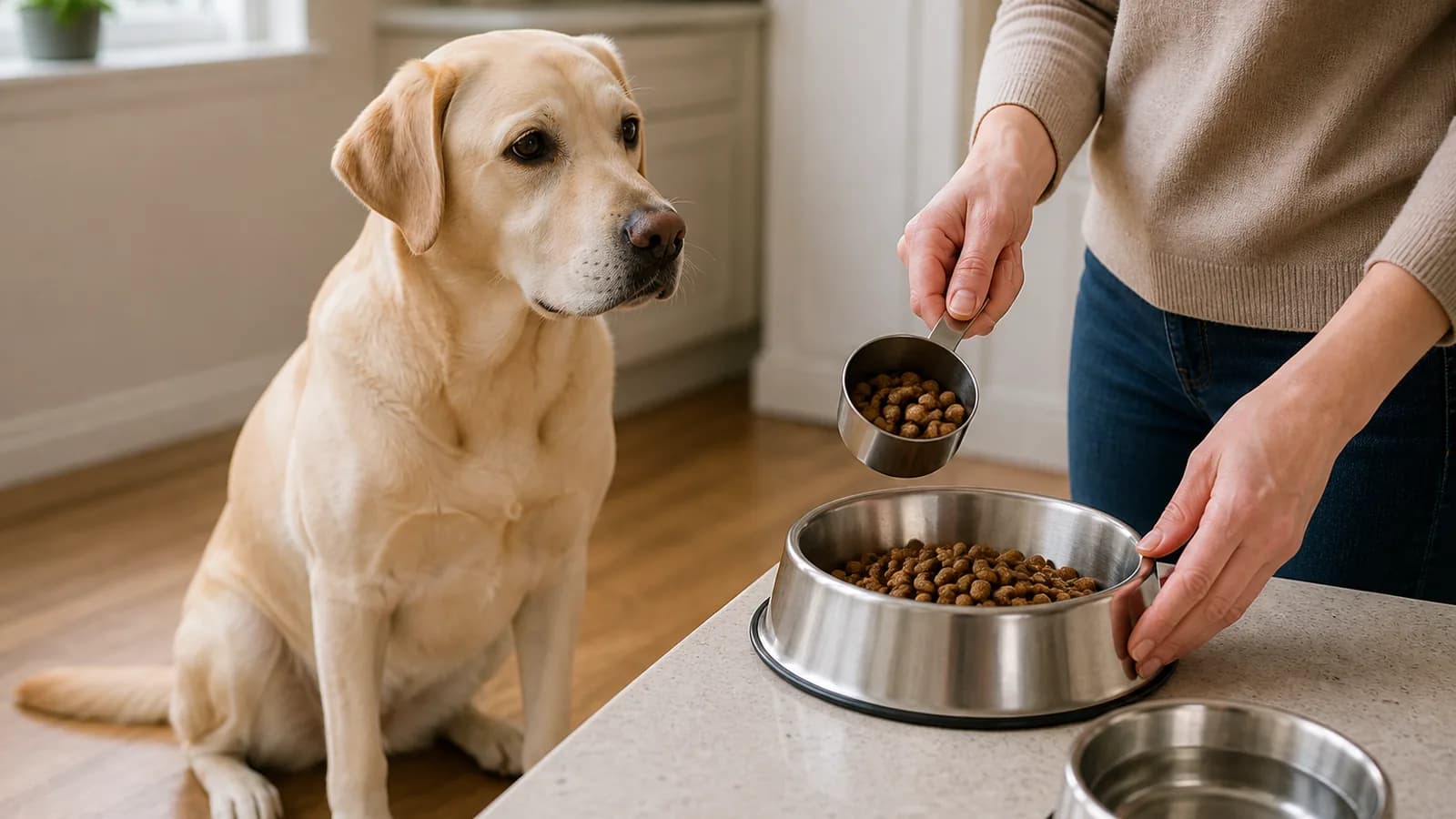
Finding a useful starting portion requires three pieces of information: what the food provides, what the dog currently receives, and how the dog's body condition changes over time. This guide will help you review those factors without treating a package chart or appetite as a diagnosis.
Individual needs can change with growth, pregnancy, illness, medication, weight goals, and activity. Ask your veterinarian for a specific feeding plan when one of those factors applies or when weight is changing without a clear reason.
Start with the dog, not the chart
Owners often want one simple feeding number, but the right amount depends on more than the package chart. Food density, age, activity, body condition, and even how many treats show up through the day all affect what the dog actually needs. The chart on the bag is useful, but it is only a starting point.
That is why the clearest feeding decisions begin with the dog’s current condition and routine.
Measure the food and watch the body
| Factor | Why it changes the portion | What to review |
|---|---|---|
| Life stage | Growth and aging change nutritional needs | The food's adequacy statement and veterinary guidance |
| Calorie density | Equal volumes can provide different energy | Calories per cup, can, kilogram, or stated serving |
| Body condition | The scale alone does not show fat distribution | Waist, rib coverage, abdominal tuck, and weight trend |
| Daily extras | Treats and chews add to total intake | Everything eaten outside regular meals |
| Activity and health | Exercise, recovery, and illness can shift needs | Recent routine changes and individual medical advice |
Scoops drift. Handfuls drift even more. The owner who thinks the dog eats one amount may actually be feeding quite a bit more after a few casual pours. Measured feeding creates better judgment because it removes one easy source of confusion.
Then watch the dog honestly. Waist, tuck, energy, coat, and weight trend all matter. A number that looks correct on paper may still be wrong for the dog standing in the kitchen.
Quick check: Measure with the same scoop or scale, record the amount and extras, and compare changes over several consistent days. A single hungry look is not enough information to reset the plan.
Food density changes the equation
Not every cup of food carries the same calories. Two foods can recommend a similar volume and still land very differently in the dog. This is why readers should keep how to read dog food labels nearby. Calorie density and ingredient context both matter when feeding amounts feel unclear.
Large breeds such as the Great Dane and food focused breeds such as the Labrador Retriever can expose feeding mistakes quickly for different reasons. One may become expensive to overfeed. The other may always act hungry even when the amount is already generous.
Count what happens outside the bowl
Treats, training rewards, table scraps, chews, and food stuffed toys all count. Many owners adjust the bowl only after the dog gains weight, when the bigger issue was never only the main meal. The more food the dog receives outside the bowl, the more important it becomes to look at the whole day rather than one feeding line.
Mistakes to avoid
- trusting the bag chart without checking body condition
- eyeballing the amount every day
- forgetting to count treats and extras
- changing the food and the amount at the same time without tracking either clearly
Contact your veterinarian if weight changes quickly, appetite changes persist, eating becomes difficult, or the dog also has vomiting, diarrhea, weakness, pain, increased thirst, or other concerning signs. Those changes should not be managed only by moving the scoop.
Better feeding amounts come from better observation
The right amount is the one that keeps the dog in good condition, suits the food, and still makes sense for the routine you actually live. Measure the food, watch the dog, and adjust with purpose instead of guessing from appetite alone.
Important context
Before you change your dog's diet
Use feeding guidance alongside your dog's age, health, activity, medications, and veterinary advice. Introduce diet changes gradually unless your veterinarian recommends otherwise.
- Check the complete label, feeding directions, calorie content, and suitability for your dog's life stage.
- Reviewed by Dr Maya Ellison.
- Persistent digestive, skin, appetite, or weight changes deserve individual veterinary attention.
Common questions
Continue your task
Related guides and next steps
How to Read Dog Food Labels
Focus on the full label, not only the front of the bag.
How to Switch Dog Food Safely
Slow food changes usually create fewer digestive surprises and give owners better information if a new diet is not working.
Labrador Retriever
The Labrador Retriever is social, steady, and deeply people focused. It tends to thrive in homes that can offer daily movement, clear routines, and regular involvement in family life.
Great Dane
The Great Dane often feels calmer than its size suggests, which is part of the appeal. The daily reality is still giant breed ownership, and that changes almost every practical detail of life.