
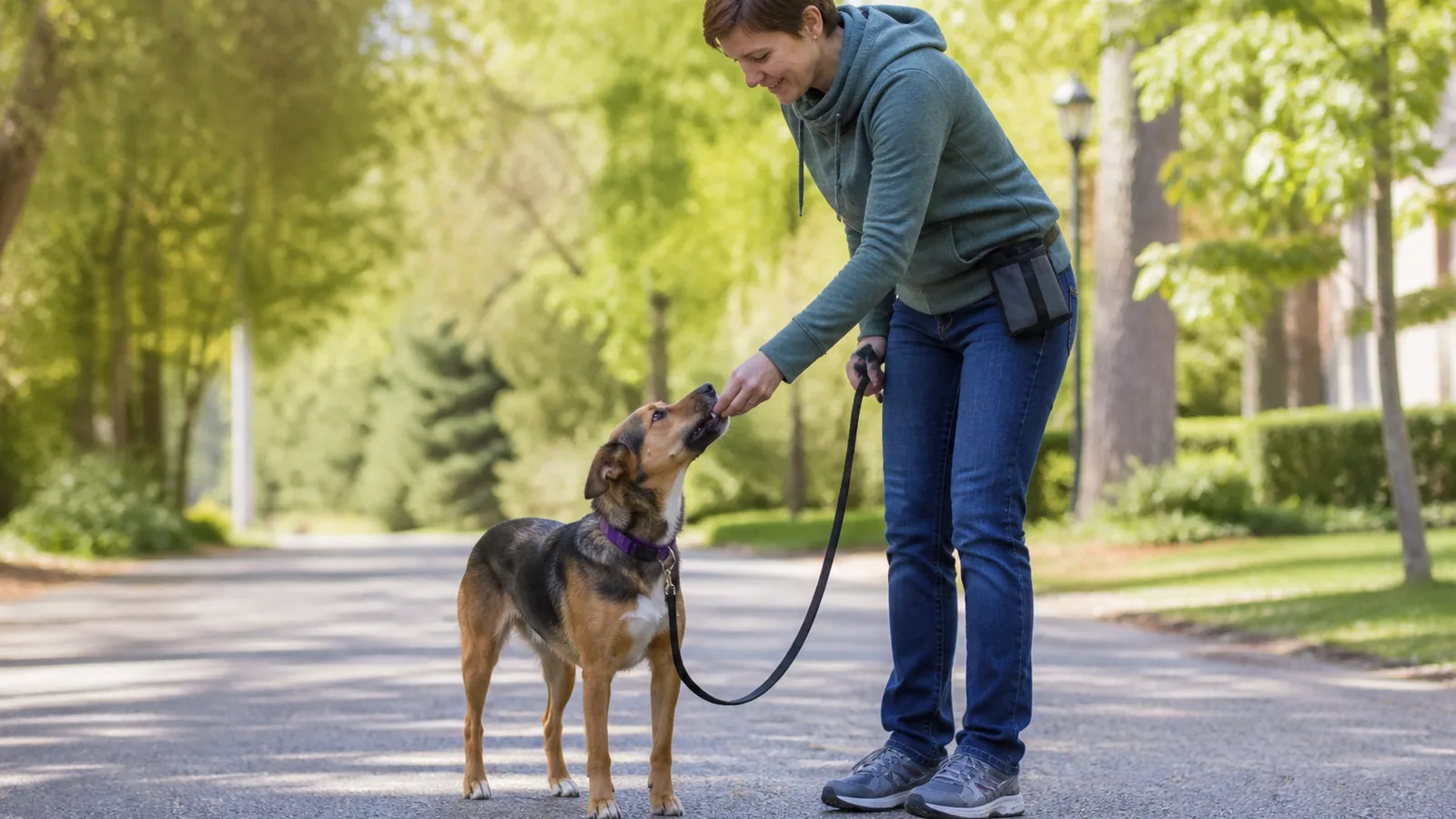
Loose-leash walking is a coordination skill, not a contest of strength. This guide shows you how to set up manageable practice, reward the position you want, progress through distractions, and choose equipment that keeps the dog secure while learning.
The practical goal is a dog who can move with you on a soft leash through the routes you actually use. That is different from a formal heel, and it gives both dog and owner room to observe the environment without constant tension.
Start before the walk feels chaotic
Loose leash walking usually falls apart before the owner thinks the session has even started. The dog sees the door, the leash comes out, excitement jumps, and by the time the sidewalk appears the dog is already pulling. That is why better leash walking often begins inside the home or in a quiet spot just outside it.
The first goal is simple. Teach the dog that staying near you pays well and makes movement continue.
Before practice, check that:
- the collar or harness fits securely and does not restrict normal movement
- rewards are easy to deliver without stopping to search for them
- the route has enough space to turn away from difficult distractions
- the dog has had a reasonable chance to relieve itself
- the session can end before either of you becomes frustrated
Reward the position you actually want
Many owners wait until the dog is already pulling, then try to fix the mistake. A cleaner approach is to reward the dog for being near you before the leash gets tight. That timing matters. The dog learns faster when the reward lands during the right position, not after a long stretch of tension.
This does not require a perfect heel. Most households simply need a dog that can walk with a soft leash and check in often enough that the route stays manageable.
Pick routes the dog can handle
A hard route can make a good training plan look bad. Busy sidewalks, barking yard dogs, traffic noise, and other dogs can all outrun the dog’s current skill. Start in a place where the dog has a fair chance to succeed, then layer in harder environments later.
That may feel less impressive, but it works better. Many leash walking problems come from route choice more than from stubbornness.
| Practice level | Environment | What success looks like |
|---|---|---|
| Foundation | Home, yard, or quiet hallway | The dog follows movement and accepts rewards near you |
| Early walking | Quiet sidewalk or low-distraction lot | Several soft-leash steps between frequent rewards |
| Added challenge | Mild sounds, smells, and distant people or dogs | The dog can notice, then reconnect with you |
| Everyday route | Normal neighborhood conditions | The dog recovers after distractions without sustained pulling |
Stop asking the leash to do the teaching
The leash is safety equipment. It should not become the main teaching tool. If the dog only learns because the leash tightens, progress is usually fragile and the walk stays tense. Better progress comes when the dog understands where to be and why that spot is worth choosing.
Common mistake: Repeated leash pops, intimidation, and painful equipment do not teach the dog which choice earns progress. If pulling is difficult to manage safely, shorten the route and work with a qualified reward-based trainer.
This is especially important with stronger breeds or fast moving young dogs. A Labrador Retriever or Australian Shepherd can quickly turn a weak leash routine into a daily struggle if the owner relies on arm strength instead of clear teaching.
Keep sessions short enough to stay useful
Loose leash walking often improves faster in several short useful repetitions than in one long frustrating march. If the dog is losing focus, reset. Change direction. Reward a few good steps. End the session before everyone is irritated. Good walking is built from clean moments repeated often.
Owners who live in dense buildings should also think about hallway and elevator manners, because calm leash habits matter before the street appears. Apartment readers may want how to choose a dog for apartment living nearby for that reason.
Mistakes to avoid
- waiting for a perfect walk before rewarding
- practicing only in places that are too hard
- turning every outing into a training marathon
- expecting the leash to fix excitement on its own
Better walks come from better setup
Loose leash walking is not really about the leash. It is about pace, timing, route choice, and helping the dog understand how to stay connected while moving through the world. Once that becomes clear, the walk stops feeling like a tug of war and starts feeling like a routine both sides can repeat.
Important context
Keep your dog's individual needs in view
Breed tendencies and general guidance are starting points. Your dog's health, history, temperament, environment, and daily routine should guide the final decision.
- Consider your dog's age, health, temperament, history, and home environment.
- Ask a qualified professional when your dog needs individual advice.
- Confirm medical, legal, travel, or provider-specific details with the appropriate professional.
Common questions
Continue your task
Related guides and next steps
How to Choose a Harness for Daily City Walks
The best harness is the one that supports real walking, not the one that wins a quick first impression online.
Recall Training for Real Life
Come should feel valuable enough that the dog wants to turn back fast even when something else looks interesting.
First Time Dog Owner Guide
Good first dog decisions come from honest routine planning, not from excitement alone.
Labrador Retriever
The Labrador Retriever is social, steady, and deeply people focused. It tends to thrive in homes that can offer daily movement, clear routines, and regular involvement in family life.