
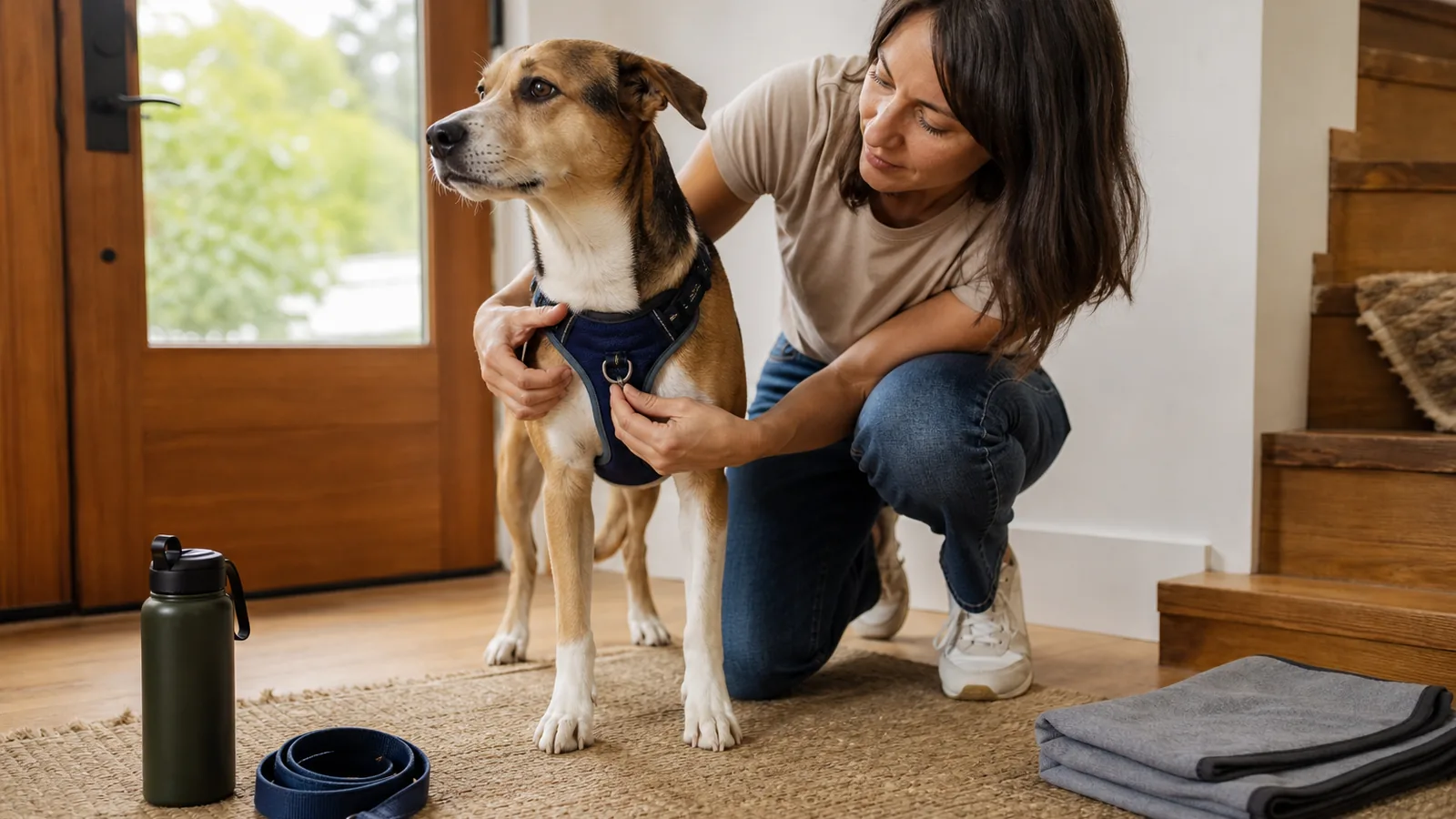
A city harness has to stay secure through doorways, sudden turns, traffic noise, and repeated short outings while allowing comfortable movement. This guide helps you assess fit, clip position, handling, escape resistance, and maintenance before trusting the harness on a busy route.
Measure the dog according to the manufacturer's current instructions and inspect the actual fit rather than relying only on a weight range or breed label. Body shape can make two dogs of similar weight fit very differently.
Start with the walk you actually take
A city harness should be chosen for repeated everyday use, not for a product photo. Think about the walk you really do. Hallway. Elevator. Busy corner. Quick relief break. Longer neighborhood loop. Rainy morning. Fast leash clip before work. That is the environment the harness needs to support.
If the gear is awkward to put on, slips during turns, or rubs in the same spot every week, the problem becomes part of the routine fast.
Fit matters more than features
Owners often get distracted by strap layouts, color choices, or marketing about control. The better question is whether the harness sits cleanly on the dog without twisting, pinching, or shifting every time the dog changes direction. A harness that moves constantly can make the dog less comfortable and the handler more frustrated.
This is especially important for body types that do not fit generic gear well, including broad chested dogs, longer backed dogs, and flat faced breeds such as the French Bulldog.
| Fit area | What good fit should allow | Warning sign |
|---|---|---|
| Neck and shoulder | Normal head position and shoulder movement | Strap presses the throat or crosses the moving shoulder |
| Chest and girth | Secure contact without pinching | Harness rotates, gaps, or restricts breathing |
| Front legs | Comfortable stride without rubbing | Chafing near the armpit or shortened movement |
| Back and clips | Hardware stays centered under changing tension | Buckles loosen, twist, or sit on a sensitive area |
Pick the clip style that matches the routine
Some owners want a front clip because the dog is still learning leash manners. Others want a back clip for simple comfortable neighborhood walks. Neither choice is automatically right. What matters is whether the harness helps you handle the dog calmly in the places you actually walk.
That is why the harness decision should live next to training, not instead of training. Pair it with how to teach loose leash walking and how to choose a leash for city walking so the gear supports a better routine instead of trying to replace one.
Think about quick on and off friction
Daily city walks often include several short trips, not one perfect long one. A harness that takes too much fiddling to fasten becomes annoying quickly, especially for older dogs, impatient puppies, or households that already feel rushed. Easy handling is not a luxury feature. It is part of whether the gear survives real life.
If the dog hates having legs threaded through narrow openings, respect that early. The best harness for that dog may be the one that opens wider and reduces handling stress.
Before the first full walk, clip the leash indoors and check the harness while the dog stands, sits, turns, and gently backs up. Recheck after several minutes of movement and again after washing, coat changes, or growth.
Security matters at doors and on sidewalks
City walking asks more of gear because there are more moments where a dog can slip, spin, or back out under stress. Check how the harness behaves when tension changes direction. Look for secure adjustment points and a fit that does not loosen over time. That matters most at building doors, near traffic, and during startled moments.
Large enthusiastic dogs such as a young Labrador Retriever can expose weak buckles or poor fit very quickly.
Safety: A harness is not escape-proof simply because it feels snug. Dogs who back out, panic, or bolt may need a carefully fitted backup connection and help from a qualified trainer to make handling safer.
The best harness reduces friction for both of you
Good walking gear should fade into the routine. The dog moves comfortably. You clip it on without a debate. The walk starts cleanly. The harness does not need constant fixing. That is the real standard.
A harness does not need to feel impressive to be right. It needs to make daily city walking calmer, safer, and easier to repeat.
Important context
Keep your dog's individual needs in view
Breed tendencies and general guidance are starting points. Your dog's health, history, temperament, environment, and daily routine should guide the final decision.
- Consider your dog's age, health, temperament, history, and home environment.
- Ask a qualified professional when your dog needs individual advice.
- Confirm medical, legal, travel, or provider-specific details with the appropriate professional.
Common questions
Continue your task
Related guides and next steps
How to Choose a Leash for City Walking
The best city leash is the one that keeps control simple when the sidewalk, elevator, or corner gets busy.
How to Teach Loose Leash Walking
A calmer walk starts by teaching the dog how to stay near you before the route gets busy.
How to Decide if Your Apartment Building Is Dog Ready
A building can allow dogs and still be a hard place to live with one every day.
French Bulldog
The French Bulldog is charming, compact, and strongly companion oriented. It often appeals to city owners, though climate limits and brachycephalic care must be taken seriously.